
TUCSON, Ariz., July 9, 2026 — Critical Path Institute® (C-Path) has awarded a $250,000 research grant to Teresa Sanchez, Ph.D., of Weill Cornell Medicine, to support the development of a novel therapeutic approach for sepsis-associated neurocognitive dysfunction.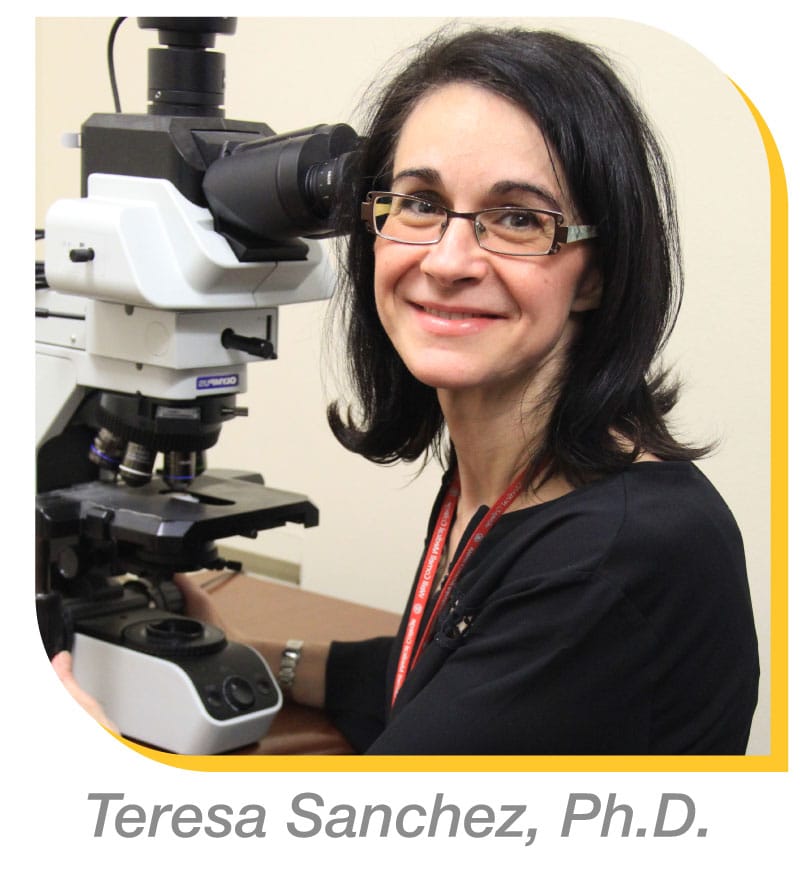 The award is part of C-Path’s Bridging Research and Innovation in Drug Development Grants (BRIDGe) program, offered through its Translational Therapeutics Accelerator.
Sepsis is a serious and life-threatening response to infection that affects approximately 50 million people worldwide each year. While many individuals survive, up to half experience lasting problems with memory, thinking, and concentration. These complications, known as sepsis-associated neurocognitive dysfunction, can significantly impact quality of life, particularly among older adults, and have been associated with a two- to fourfold increased risk of dementia. Despite its prevalence, long-term impact and link to dementia, the condition remains poorly understood and lacks effective treatment options.
Dr. Sanchez’s research focuses on developing a new type of therapy designed to protect the brain from inflammation-related damage during and after sepsis. Specifically, her team aims to advance a novel antibody-based approach targeting a previously unexplored vascular mechanism involved in maintaining the integrity of the blood–brain barrier and the health of the brain’s microvasculature. By limiting vascular dysfunction and the entry of harmful blood components into the brain, this strategy has the potential to prevent or slow the onset of neurodegeneration and cognitive decline associated with sepsis.
The long-term goal of this effort is to develop a first-in-class therapy that preserves neurovascular health in sepsis and other neuroinflammatory conditions without compromising immune defense. Dr. Sanchez and her multidisciplinary team bring deep expertise in vascular biology, neurodegeneration, and therapeutic antibody development — positioning the project for strong translational impact.
“This funding from C-Path will enable us to optimize a promising first-in-class therapeutic approach developed in our laboratory, in collaboration with Dr. Peter Meinke, an Assistant Professor of Pharmacology at Weill Cornell Medicine. The approach has demonstrated efficacy in preclinical models, and this support will help us advance it beyond academic discovery toward clinical development, with the ultimate goal of improving long-term outcomes for patients recovering from sepsis,” said Dr. Sanchez, Associate Professor of Pathology and Laboratory Medicine and Associate Professor of Neuroscience in the Feil Family Brain and Mind Research Institute at Weill Cornell Medicine. “By supporting critical translational studies, the C-Path award represents an important step toward developing an effective therapy for the neurological consequences of this complex condition. This novel strategy may also have broader therapeutic potential in diseases characterized by blood–brain barrier dysfunction and neurovascular inflammation, including stroke and dementia.”
“Sepsis-associated neurocognitive dysfunction represents a substantial and underrecognized global health challenge,” said Maaike Everts, Ph.D., Executive Director of C-Path’s Translational Therapeutics Accelerator. “We are proud to support Dr. Sanchez’s work to advance promising therapeutic candidates out of the academic lab and toward the clinic, with the goal of accelerating the development of much-needed treatments for patients.”
C-Path’s Translational Therapeutics Accelerator supports innovative drug development science across a wide range of disease areas, fostering collaborations that bridge academic discovery and therapeutic development to address unmet medical needs. To learn more, visit c-path.org/programs/trxa or contact the team at trxa@c-path.org.
About Critical Path Institute
Critical Path Institute (C-Path) is an independent, nonprofit established in 2005 as a public-private partnership, in response to the FDA’s Critical Path Initiative. C-Path’s mission is to lead collaborations that advance better treatments for people worldwide. Globally recognized as a pioneer in accelerating drug development, C-Path has established numerous international consortia, programs and initiatives that currently include more than 1,600 scientists and representatives from government and regulatory agencies, academia, patient organizations, disease foundations and pharmaceutical and biotech companies. With dedicated team members located throughout the world, C-Path’s global headquarters is located in Tucson, Arizona and C-Path’s Europe subsidiary is headquartered in Amsterdam, Netherlands. For more information, visit c-path.org.
About C-Path’s Translational Therapeutics Accelerator
Critical Path Institute’s Translational Therapeutics Accelerator is a global drug accelerator focused on supporting academic scientists in advancing novel therapeutics from university-based labs to drug development pipelines of pharmaceutical companies and, ultimately, the clinic. As a nonprofit neutral convener of patient groups, academia, pharmaceutical companies and regulatory agencies, C-Path brings a breadth of scientific and drug development planning not available in other accelerator programs. C-Path’s accelerator is uniquely situated to leverage the expertise available through C-Path’s >20 disease-based consortia, as well as regulatory expertise and project management, to empower academic investigators to succeed in bringing safe and effective treatments to patients. For more information, visit c-path.org/trxa or email trxa@c-path.org.
Media Contacts:
Roxan Triolo Olivas
C-Path
520.954.1634
rolivas@c-path.org
Kissy Black
C-Path
615.310.1894
kblack@c-path.org