
Now in its fourth year, the Flinn Foundation Summer Internship Program at the U of A College of Medicine – Phoenix continues to cultivate an environment of learning and innovation to inspire college-level students with a passion for science and medicine.
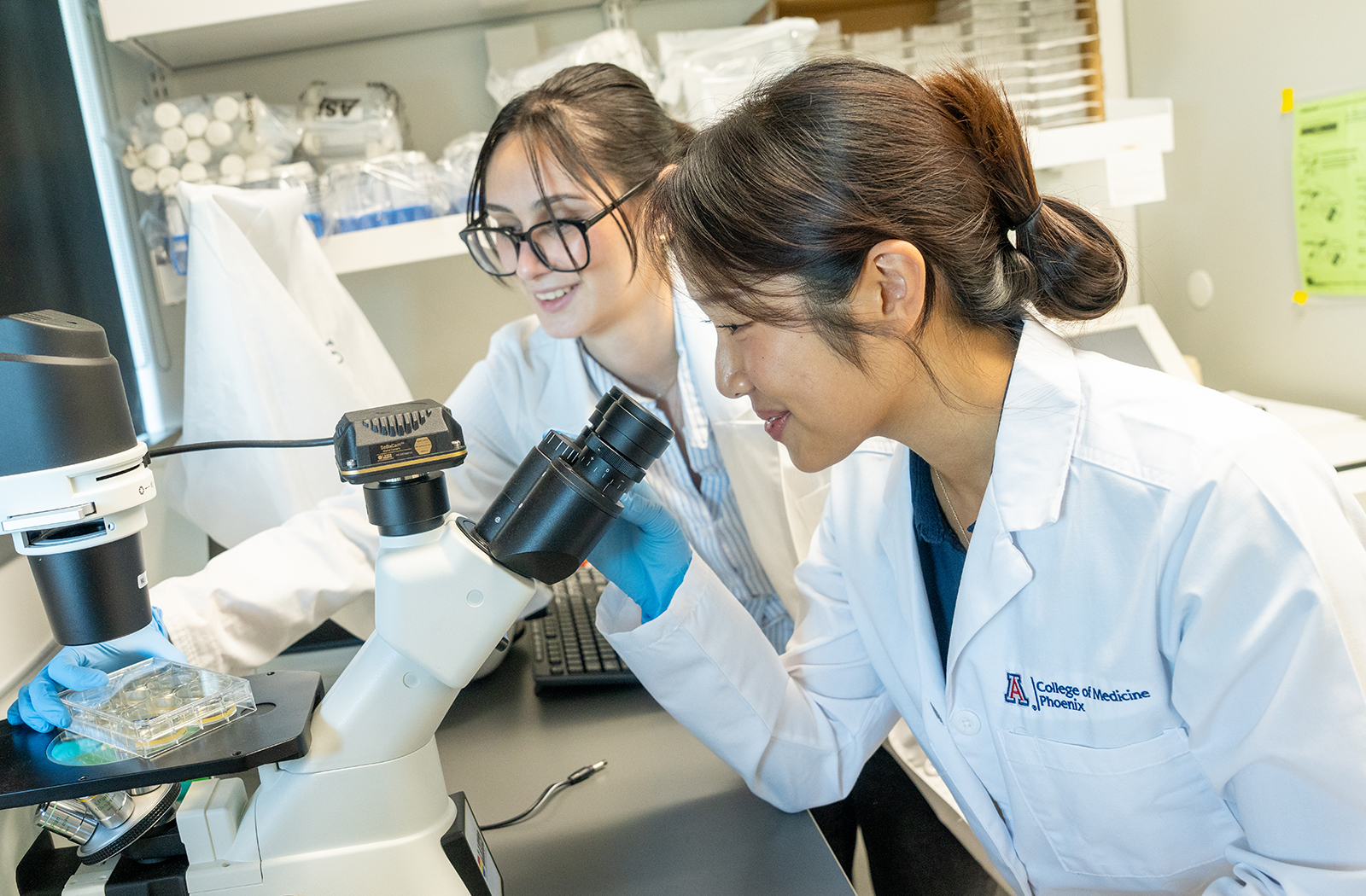
Driving research discovery is a key initiative for the University of Arizona College of Medicine – Phoenix. Science being conducted in labs on the campus are working toward solutions that will help ensure a healthier future for the next generation. And part of that next generation is doing their part to fuel those innovations of tomorrow.
Now in its fourth year, the Flinn Foundation Summer Internship Program at the U of A College of Medicine – Phoenix continues to cultivate an environment of learning and innovation to inspire college-level students with a passion for science and medicine.
The internship, held from June 2 to August 7, provides a hands-on opportunity for these students — some of whom will be pre-med — to engage in hypothesis-driven biomedical research.
This summer’s cohort paired 11 undergraduate students with physician-scientists in a variety of specialties at the College of Medicine – Phoenix. Through fostered collaboration, each intern will ultimately write a brief scientific paper about their research and present their findings at a symposium at the conclusion of the program.
Meet Some of this Year’s Interns
Adam Akkad
Born in Detroit, Michigan to a Syrian father, Adam Akkad and his family planted their roots in Arizona when he was two years old.
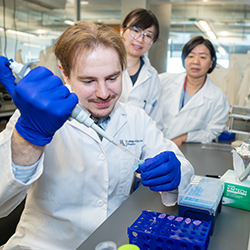
Hongyu Qiu, MD, PhD and Adam Akkad
For most of his life, Akkad expected to pursue business. That all changed during the COVID-19 pandemic, when he had the opportunity to shadow his father, who is an interventional cardiologist.
“Through that experience, I saw not only the technical and procedural side of medicine, but also the teamwork, judgement and responsibility that define the role of a physician,” Akkad said.
After consulting with physician mentors and friends, Akkad heard about the strong educational and training opportunities at the at the College of Medicine – Phoenix; this included the Flinn Foundation Sumer Internship Program.
“One experience I had hoped to gain during college was exposure to bench research, which I had not been able to pursue through my previous dry-lab research,” Akkad said. “This internship offered the opportunity to develop those skills while learning in an environment centered on mentorship, collaboration and medicine.”
Akkad, who has been studying in the laboratory of Hongyu Qiu, MD, PhD, a professor of Internal Medicine, is working on two projects. The first investigates the use of 4-PBA-reporgrammed macrophages as a potential treatment for vascular inflammaging, and the second is a literature review examining how sirtuins 1-7 modulate vascular aging.
Akkad said he has truly enjoyed working with Dr. Qiu and said she challenges her students in ways that foster independence and growth.
And for Akkad, the experience has proved beneficial in other ways, as well. It has taught him that even when someone’s work differs from his, sharing ideas can still lead to meaningful connections.
“Beyond the lab, this internship has given me a much clearer understanding of the College of Medicine – Phoenix’s culture,” Akkad said. “Hearing Dean Fred Wondisford and Dean Ranita Sharma speak about the institution’s support for its students and encouragement of student-led initiatives strengthened my interest in the college.”
Kristine Kim
A rising junior studying biology at Arizona State University (ASU), Kristine Kim moved from South Korea to Arizona in the eighth grade. From an early age, she had a fascination with discussing global issues.

Isabelle Schrauwen, PhD, and Kristine Kim
Kim’s time in speech and debate opened her eyes to how health care has universal relevance to everyone’s life. Additionally, learning how the health care of minority and low-income populations is disproportionately affected by political and economic forces inspired to pursue a career in a health profession.
“There are many ways to tackle this issue, but I wanted to be someone that connects with these people directly at the forefront of health care and someone who has the skillsets to really bring the service people need,” Kim said.
Studying in the lab of Isabelle Schrauwen, PhD, an associate professor of Translational Neurosciences, Kim’s research project is focused on discovering factors that may affect intellectual disorder and hearing loss conditions in patients.
In her work, she seeks to discover the answers by optimizing an established protocol for induced pluripotent stem cell differentiation into neurons, as well as identifying miRNA knockdown models as a fundamental step toward researching the conditions that manifest in patients.
The internship has served as an invaluable opportunity for Kim to witness first-hand how research is the cornerstone of medicine, serving as a catalyst for its advancement.
“Seeing all the work that goes into novel discoveries in medicine, I came to really appreciate the medical knowledge and technology that we currently have,” Kim said. “Learning about the current medical questions and conditions that current research is trying to answer, I learned the value and criticality of research in continuing to improve medicine and health care.”
Oluwadarasimi Mewomo
Originally born in Nigeria before moving to South Africa at eight years old, Oluwadarisimi Mewomo’s interest in medicine was sparked during her high school biology class. She found the nervous system to be one of the most intriguing systems of the body.
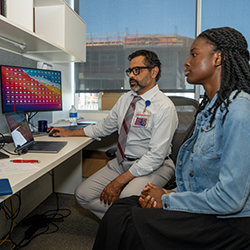
Ayman Fanous, MD, and Oluwadarasimi Mewomo
“I realized that there was so much yet to be discovered about a lot of neurological disorders, and it stirred up a desire to understand the underlying mechanisms of these disorders and how that could contribute to improving the lives of patients affected by them,” Mewomo said.
After learning about the Flinn Foundation Summer Research Internship Program in an email from ASU’s biomedical engineering department, Mewomo was instantly drawn to its emphasis on translational biomedical research.
“I saw this as an opportunity to be involved in research that was not only intellectually stimulating but also had the potential to make a meaningful contribution to health care and improve patient outcomes,” Mewomo said.
Mewomo’s research focuses on understanding how differences in genetic profiles may contribute to the variation in symptom presentation observed among individuals with schizophrenia. She specifically investigated disorganization symptoms — such as speech disturbances and positive formal thought disorders.
She was assigned to work in the laboratory of Ayman Fanous, MD, professor and chair of the Department of Psychiatry at the college. Under his tutelage, she has gained exposure to the diverse research projects being conducted by other members of the lab.
“During the first few weeks, Dr. Fanous had me focus on reading research papers on schizophrenia and bipolar disorder, as well as other foundational resources,” Mewomo said. “I discussed each paper with him during our weekly one-on-one meetings, and, through these discussions, I developed a deeper understanding of schizophrenia and bipolar disorder and learnt more about the broader field of psychiatric genetics.”
An important takeaway from the internship for Mewomo is to remain curious and to embrace a mindset of lifelong learning. As medicine is ever evolving and new advancements are made, Mewomo said it is important for her to stay informed and commit to continuous scholarship to provide the best care for her future patients.
“I find the movement toward more personalized approaches in medicine, particularly in psychiatry, incredibly exciting,” Mewomo said. “Ultimately, my experience at the Flinn Summer Research Internship strengthened my desire to continue to be involved in biomedical research that can be translated into meaningful improvements in patient care.”
Kylee Pinon
Majoring in biomedical sciences at Northern Arizona University, Kylee Pinon discovered the Flinn Foundation internship through her biomedical advisors at NAU. She was instantly drawn toward the experience as an opportunity to be exposed to translational research.
Pinon was first attracted to medicine as a young girl — a goal that was solidified after being diagnosed with a heart arrythmia about a year ago.
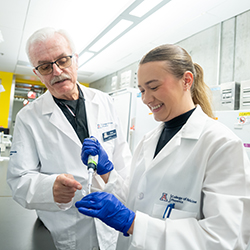
“The healing process was not easy, but my specialist was always there to answer questions I had and gave me an ease of mind,” Pinon said. “I want to be a doctor like my specialist to help those that are too afraid to ask for help.”
In the lab of Christopher Glembotski, PhD — vice dean for Research at the college and director of the Translational Cardiovascular Research Center — Pinon’s investigation is focused on human-induced pluripotent stem cell-cardiomyocytes (hiPSC-CM) and adeno-associated virus 9 (AAV9).
Focused on creating a quicker process for the lab’s AAV validation tests, Pinon is using hiPSC-CM to test the validity of AAV9 gene transfer to cells to determine if they can be used as a viable platform.
Pinon said she treasures the opportunity to collaborate with Dr. Glembotski. He has a wealth of knowledge and always takes the time to discuss what is going on at the cellular level within the experiments.
“Not only am I getting in the lab and doing experiments, but I get to learn about all the administrative aspects as well,” Pinon said. “I am learning about how much planning and thought goes into conducting an experiment.”
Pinon begins each day of the internship ready to work and gain new insights about discoveries made in the laboratory. For her, investing intentional time reaps the great reward of knowledge.
“I treat every day as a new learning opportunity, and I have truly come so far in the time I have been here,” Pinon said. “I have so much more I can learn, and I cannot wait to see what is waiting for me.”
Additional Pairings in the Cohort

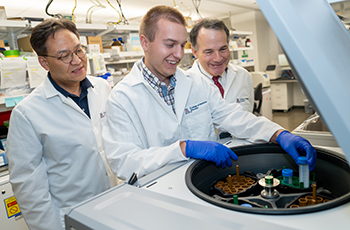
Nipavan Chiamvimonvat, MD, and Abderrahman Benmaghnia
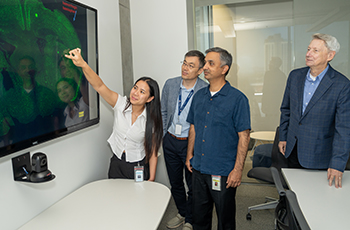
Fred Wondisford, MD, MS, MBA, and Adam Smart
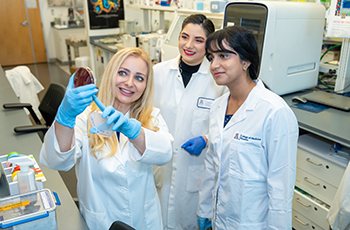
Guy Reed, MD, MS, and Alexis Ho
Melissa Herbst-Kralovetz, PhD, and Anmary Thomas

Liya Yin, MD, PhD, and Harini Mahendran

Alexander B. Niculescu, MD, and Brendan Salisbury

Tatiana Kalin, MD, PhD, Jocelyn Gerken
About the College
Founded in 2007, the University of Arizona College of Medicine – Phoenix inspires and trains exemplary physicians, scientists and leaders to advance its core missions in education, research, clinical care and service to communities across Arizona. The college’s strength lies in our collaborations and partnerships with clinical affiliates, community organizations and industry sponsors. With our primary affiliate, Banner Health, we are recognized as the premier academic medical center in Phoenix. As an anchor institution of the Phoenix Bioscience Core, the college is home to signature research programs in neurosciences, cardiopulmonary diseases, immunology, informatics and metabolism. These focus areas uniquely position us to drive biomedical research and bolster economic development in the region.
As an urban institution with strong roots in rural and tribal health, the college has graduated more than 1,000 physicians and matriculates 130 students each year. Greater than 60% of matriculating students are from Arizona and many continue training at our GME sponsored residency programs, ultimately pursuing local academic and community-based opportunities. While our traditional four-year program continues to thrive, we will launch our recently approved accelerated three-year medical student curriculum with exclusive focus on primary care. This program is designed to further enhance workforce retention needs across Arizona.
The college has embarked on our strategic plan for 2025 to 2030. Learn more.
By Chase Congleton
University of Arizona College of Medicine Phoenix