He learned to be a scientist as a teenager. Now he seeks a cure for a childhood cancer
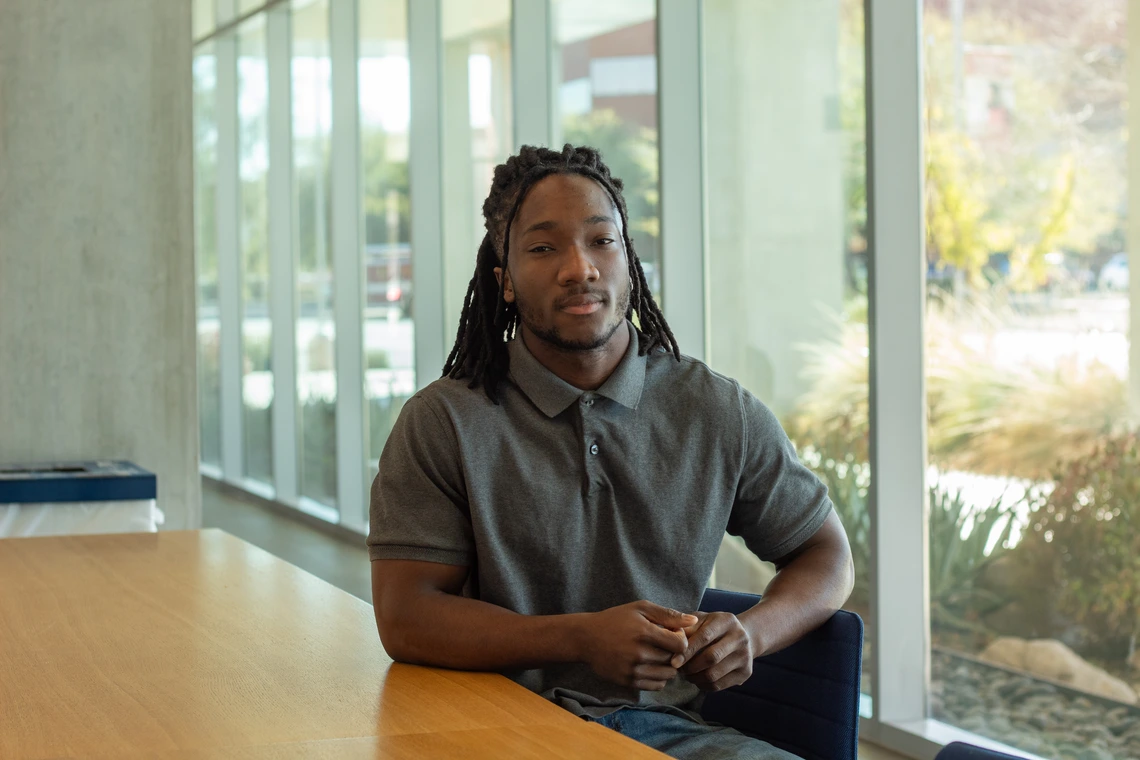
Besides learning how to conduct experiments and read research papers, the KEYS experience also helped Moses Foiryolo understand how much resilience and diligence it takes to be a researcher. (Lily Howe/BIO5 Institute)
A high school student involved in high-level neuroimaging is not a common occurrence, but that’s exactly what Moses Foiryolo did when he was 18.
In 2021, when Foiryolo was a junior at Sahuaro High School in Tucson, he learned about the KEYS Research Internship offered by the University of Arizona’s BIO5 Institute. The decision to join KEYS opened a whole new world of research to Foiryolo, who is now with the American Cancer Society doing a post-baccalaureate program.
“Prior to the program, the entire idea of a scientist was just limited to what I saw on television. Also, it’s not really a thing back in my country, Liberia,” Foiryolo said.
Never too young
As part of the KEYS program, Foiryolo was matched into the lab of Elizabeth Hutchinson, an associate professor in the Department of Biomedical Engineering.
“As a high school student, reading research papers was just daunting,” Foiryolo said.
But Hutchinson and the other KEYS mentors at that time gave Foiryolo the required resources and support to get him acclimatized to his new environment.
The experience at KEYS helped Foiryolo think critically and made him more comfortable reading and interpreting scientific literature way early in his research career.
“I developed that independence in research because of my time in KEYS,” Foiryolo said. “I learned how to troubleshoot and solve things on my own.”
Besides learning how to conduct experiments and read research papers, Foiryolo said he also understood that it takes immense resilience to be a researcher, which involves tough situations such as navigating failed protocols with diligence.
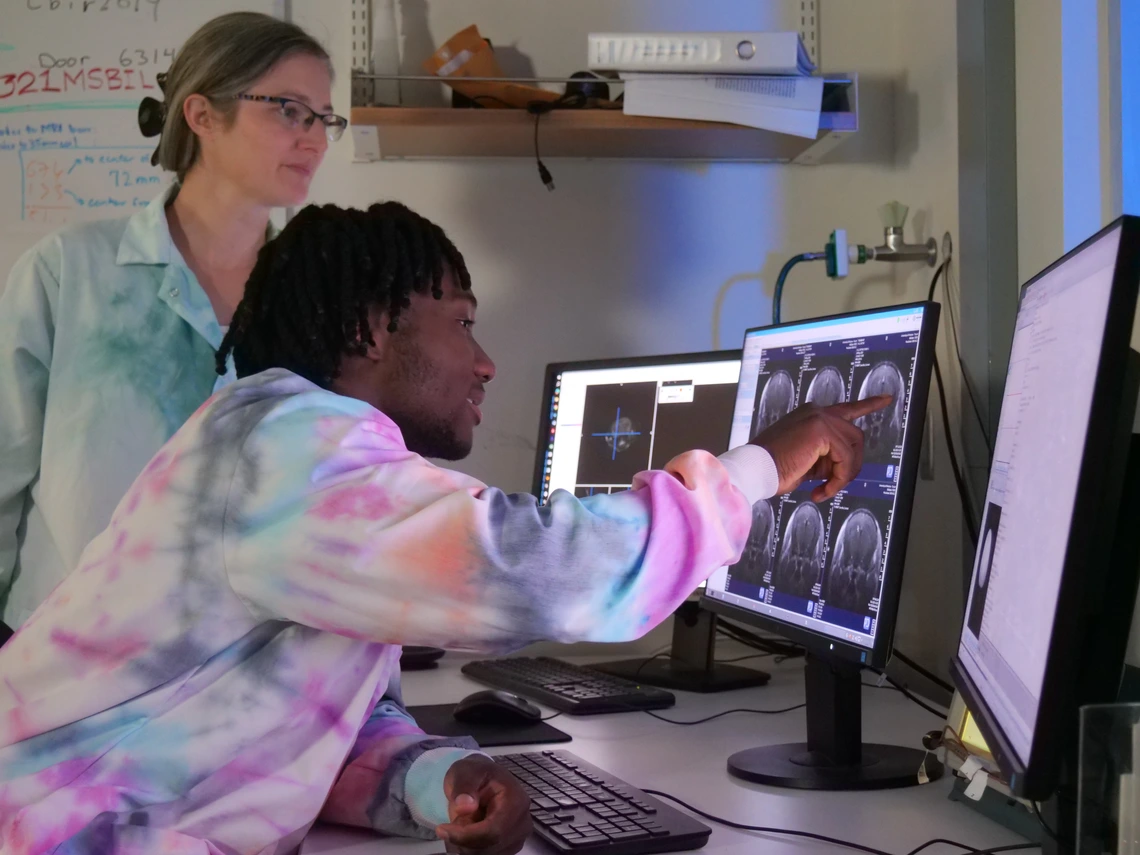
Moses Foiryolo in Elizabeth Hutchinson’s lab analyzing MRI images. (Deanna Rodriguez/BIO5 Institute)
Building the program that built him
Now, life has come full circle for Foiryolo. Prior to graduating with a bachelor’s degree in physiology in 2025, Foiryolo signed up to be a student assistant for KEYS, where he helped 55 students working on biomedical science projects.
When Foiryolo was a KEYS intern in 2021, the program was fully online due to the COVID-19 pandemic. But when he returned to KEYS as a mentor in 2022, the program became in-person, a challenging scenario that Foiryolo navigated with ease. He led a team of six students, each of them in different fields of research, ranging from plant sciences to mechanical engineering.
As a student assistant, Foiryolo became closely involved in planning the KEYS program curriculum and matching students to their respective labs. This experience gave Foiryolo a unique opportunity to understand and appreciate the amount of effort and work it takes to run such an intensive program.
“It’s an incredible opportunity, and getting to manage over 50 people is a valuable experience,” Foiryolo said.
Besides mentoring students, Foiryolo also led the debriefing meetings for other KEYS student mentors where he played an important role in helping other mentors approach their students.
Chasing a cure for a pediatric cancer
Foiryolo went from being a KEYS participant to a mentor to a student worker in a lab. Now, at the U of A Cancer Center, as part of his post-baccalaureate program with the American Cancer Society, Foiryolo is working on developing a drug for Ewing’s sarcoma – the second most common pediatric malignant bone cancer in children and adolescents.
“We’re screening some compounds that seem to be specific for Ewing’s sarcoma, and I’m working to understand the mechanisms of those compounds,” Foiryolo said.
Foiryolo, who is looking to deepen his knowledge in cancer cure, is planning to apply for an MD-PhD program.
It all started at KEYS
For Foiryolo, KEYS served as a foundational platform for him to learn more about himself and what he wanted to become. The program, according to him, also helped Foiryolo evolve as an ethical researcher.
“For me, KEYS is my foundation. I think everybody that has come through the program has taken something invaluable with them,” Foiryolo said
By Niranjana Rajalakshmi, University Communications
The University of Arizona
SOURCE: https://news.arizona.edu/news/he-learned-be-scientist-teenager-now-he-seeks-cure-childhood-cancer