
Hon. Jayanta Bhattacharya, M.D., Ph.D., Director, National Institutes of Health testified in the Senate Health Education, and Pensions Committee on February 3, 2026. The hearing, titled “Modernizing the National Institutes of Health: Faster Discoveries, More Cures” focused on the vital role of the NIH in our nation’s health innovation leadership on the global stage.
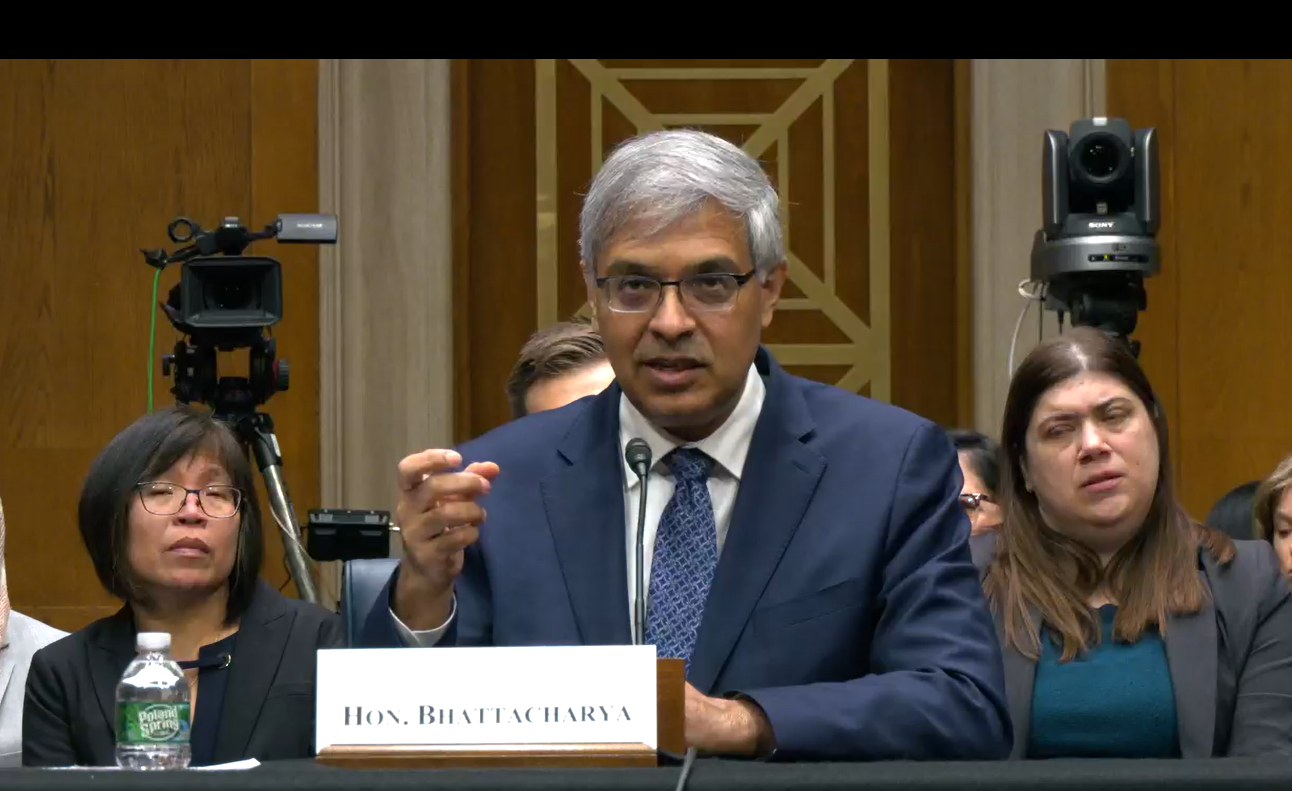
Hon. Jayanta Bhattacharya, M.D., Ph.D., Director, National Institutes of Health testifies in the Senate Health Education, and Pensions Committee on February 3, 2026. (Image – Screen shot of live testimony) Click the image to watch on YouTube.
Click here to watch the recording of the full hearing on YouTube.
Hon. Jayanta Bhattacharya, M.D., Ph.D., Director, National Institutes of Health testified in the Senate Health Education, and Pensions Committee on February 3, 2026.
U.S. Senator Bill Cassidy, M.D. (R-LA), Chair of the U.S. Senate Health, Education, Labor, and Pensions (HELP) Committee, delivered opening remarks during the hearing on how to modernize the National Institutes of Health (NIH) to bring innovative, lifesaving cures to American families.
The Senate Committee on Health, Education, Labor, and Pensions will please come to order.
The National Institutes of Health (NIH) funds more than 50,000 biomedical research projects a year, more than any other institution in the world. These investments drive lifesaving advances to address chronic disease, cure cancers, and treat other conditions affecting millions of Americans.
I treated patients in my medical practice for over 25 years. I’ve seen the power of innovation to save lives. And I’ve seen the tragedy when a patient suffers and dies from a disease for which there is no treatment.
For decades, Republicans and Democrats have supported the NIH mission. Just about every 10 years, Congress considers NIH legislation. In 2006, we passed the NIH Reform Act, which empowered the director to advance science through the Common Fund and better oversee all 27 institutes and centers. In 2016, we passed the 21st Century Cures Act, historic legislation accelerating large-scale research to bring treatments and cures to Americans.
It’s now 2026; it’s time for us to strengthen NIH and American leadership in biomedical research.
Putting down partisan jerseys and working together to improve families’ health, Congress, and this Committee can do this.
Dr. Bhattacharya’s opening statement began:
Chairman Cassidy, Ranking Member Sanders, and Distinguished Members of the Committee, Thank you for the opportunity to testify today on the modernization of the National Institutes of Health (NIH). NIH is the world’s premier biomedical research institution. Our mission is to seek fundamental knowledge about the nature and behavior of living systems and to apply that knowledge to enhance health, lengthen life, and reduce illness and disability. Achieving our mission depends on the confidence of the American people. As stewards of taxpayer resources, NIH is entrusted to support cutting-edge research that will improve the health and well-being of all people. That public trust is embodied in everything we do and every decision we make at NIH.
This hearing comes at an opportune time, as the promise of biomedical research has never been more inspiring. With that said, it is critical we take a hard look at NIH’s structures, policies, and operations to ensure they are optimized to deliver. At the same time, we must look forward to a future of strengthened public trust and strategic positioning that allows NIH to meet emerging public health challenges.
Building and sustaining public trust requires not only transparency and accountability, but also demonstration that NIH supported research delivers meaningful, real-world benefits. In 2025, NIH investments continued to demonstrate how modernized, data driven, and human relevant science can translate into improved health outcomes. NIH funded investigators achieved a historic milestone by successfully delivering a personalized gene editing therapy to an infant with a rare, previously incurable disease, an advance made possible by long term federal investment in translational infrastructure. NIH research also generated new insights into Alzheimer’s disease, including evidence linking herpes zoster vaccination to reduced dementia risk, showing the power of population level data to inform prevention strategies. These examples emphasize how NIH’s modernization of its scientific approach and embrace of innovative technologies can strengthen public trust by delivering relevant and responsive research.
NIH has long viewed modernization as one way to maintain momentum with evolving scientific standards and public expectations. In that context, Senator Cassidy’s white paper represents a good-faith contribution to this discussion. It reflects a broader bipartisan interest of ensuring NIH remains effective, accountable, and worthy of public confidence. Congressional oversight and engagement have been integral to NIH’s success for decades, and we view this two-way dialogue as part of a shared commitment to strengthening the agency.
Read the full text of Dr. Bhattacharya’s opening testimony